Navigating the Invisible Wall: Understanding Non-Tariff Barriers in India-China Trade
By iKargos Team ·
In global commerce, tariffs and customs duties are the visible walls that nations build to protect domestic industries. However, international trade is increasingly governed by an invisible labyrinth of rules known as Non-Tariff Barriers (NTBs). While traditional tariffs are easy to measure and negotiate, NTBs represent complex regulatory hurdles that significantly shape modern economic landscapes.
What Are Non-Tariff Barriers and How Do They Restrict Trade?
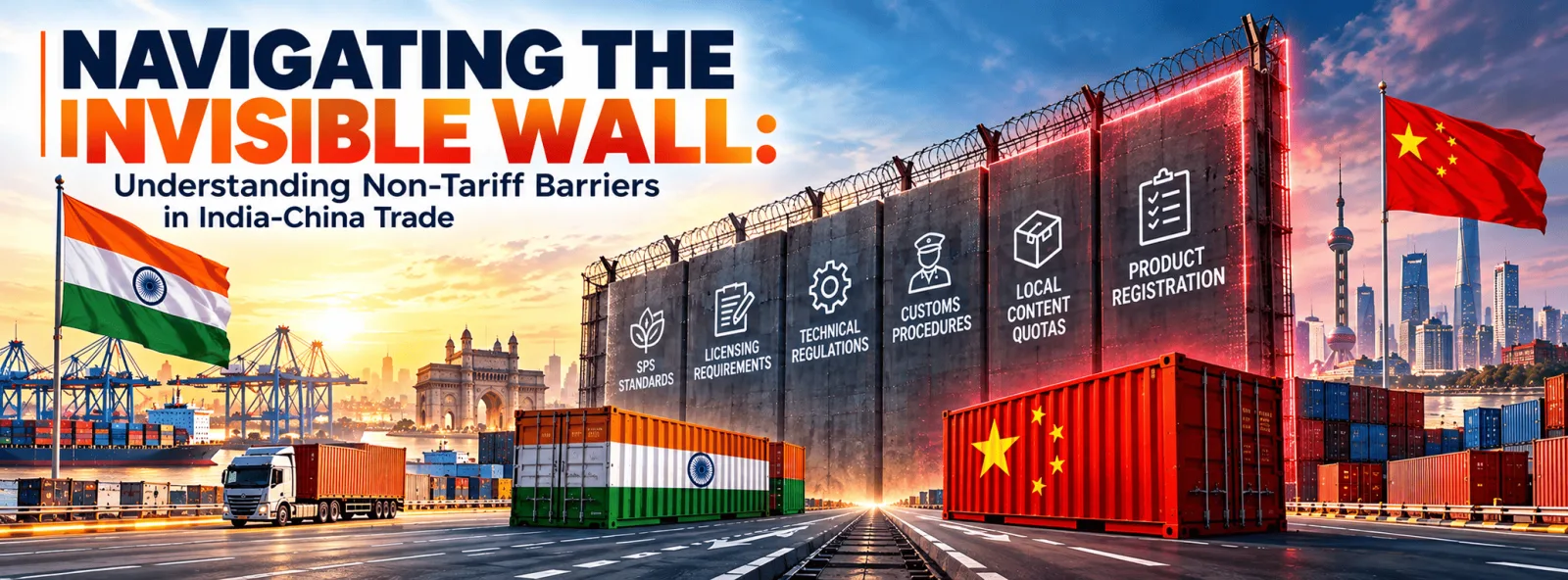
Non-tariff barriers refer to a diverse array of trade restrictions that are not conventional import duties or taxes. They include stringent Sanitary and Phytosanitary (SPS) standards, complex licensing requirements, strict technical regulations, cumbersome customs procedures, local content quotas and prolonged product-registration processes.
Although many NTBs are ostensibly implemented to achieve legitimate goals - such as protecting consumer health, preserving environmental standards or ensuring national security - they frequently function as protectionist tools. By inflating compliance costs, imposing unpredictable delays and creating bureaucratic ambiguity, NTBs make it exceptionally difficult and costly for foreign companies to access a domestic market, effectively choking off cross-border competition.
The Impact on India-China Trade.
The friction caused by NTBs is perhaps most pronounced in bilateral trade between India and China. Despite deep economic interconnectedness, trade dynamics between the two Asian giants are heavily skewed, with India facing a massive structural trade deficit.
As Indian policymakers have frequently highlighted, China’s opaque and stringent non-tariff barriers remain the single biggest hurdle for Indian exports. While Indian manufacturing is heavily reliant on Chinese raw materials and intermediate inputs (such as Active Pharmaceutical Ingredients and electronic components), Indian sectors with high competitive advantages - such as IT services, generic pharmaceuticals and agricultural commodities like bovine meat and rice - face severe market-access restrictions in China. Protracted product approvals, rigorous local testing norms and selective regulatory red tape effectively lock Indian goods out, creating a deep structural trade asymmetry.
How Can India Address These Barriers?
Overcoming this challenge requires a strategic, multifaceted approach:
- Aggressive Bilateral Diplomacy: India must continuously press for institutionalized market-access mechanisms. This includes pushing for transparent, time-bound approval processes for pharmaceuticals and agricultural products through dedicated bilateral joint working groups.
- Strengthening Domestic Testing Infrastructure: To counter arbitrary technical barriers, India must upgrade its domestic laboratories to match international accreditation standards. Mutual Recognition Agreements (MRAs) can then be pursued so that tests certified in India are readily accepted abroad.
- Strategic Diversification and Self-Reliance: To reduce vulnerabilities stemming from asymmetric trade dependencies, initiatives like Atmanirbhar Bharat must aggressively build domestic capacities in critical sectors.
- Leveraging Multilateral Forums: India can utilize global trade platforms, such as the World Trade Organization (WTO), to challenge NTBs that lack scientific justification or violate fair-trade agreements.
Conclusion
As global trade evolves, conquering traditional tariffs is no longer enough. For India to secure a balanced and fair economic relationship with major partners like China, dismantling invisible regulatory blockades is vital. Strategic diplomacy paired with robust domestic industrial capabilities will be the keys to unlocking true market access.