
Sustainability, port-led growth, inland waterways showcased at IMW 2025
Oct 30, 2025
India Maritime Week (IMW) 2025 witnessed landmark developments as the Government of India reaffirmed its commitment to sustainability, innovation, security and maritime transformation. Deliberations by policymakers, thought leaders and maritime experts across port infrastructure, green energy, and defence shipbuilding set the tone as India’s ambition to lead the global maritime transition through technology, collaboration, and climate responsibility. The day featured focused sessions on Green Maritime, Inland Waterways, Maritime Safety and Security, Cruise and Passenger Economy, and Fortifying Global Supply Chains.
Green Maritime Day: India’s Commitment to Net Zero
At the Green Maritime Day session, Union Minister for Ports, Shipping and Waterways Mr Sarbananda Sonowal highlighted India’s unwavering focus on building a sustainable and resilient maritime future.
“At Green Maritime Day, it is a day that embodies our shared resolve to shape a cleaner and more sustainable future for global shipping,” the Mr Sonowal said.
Under the Net Zero by 2070 commitment, India aims to reduce carbon emissions per ton of cargo by 30% by 2030 and 70% by 2047, making the maritime sector a key driver of climate action.
Mr Sonowal emphasised that flagship initiatives such as the Sagarmala Programme, Maritime India Vision 2030, Harit Sagar Guidelines, and the Maritime Amrit Kaal Vision 2047 place sustainability, innovation, and climate responsibility at the core of India’s maritime growth.
Through the National Green Hydrogen Mission, India has designated VOC, Paradip and Deendayal Ports as green hydrogen hubs, laying the foundation for a clean-fuel economy. Across the country, over 12 million metric tonnes of green hydrogen-based e-fuel capacity has been announced, with ports emerging as centres for production, bunkering, and exports, driving industrial growth and green jobs.
“As we look toward Amrit Kaal 2047, our goal is not only to expand maritime capacity but also to make it greener, smarter, and more resilient,” Mr Sonowal said. “With our unique geography along key global trade routes, India is poised to become a hub for green shipping corridors, connecting domestic and international markets through clean energy trade.”
India’s first national shore-power standard will enable vessels to draw clean electricity while docked, significantly reducing port-side emissions. Ports like Jawaharlal Nehru Port Authority (JNPA) are leading the shift with battery-powered trucks and electric logistics systems toward zero-emission operations.
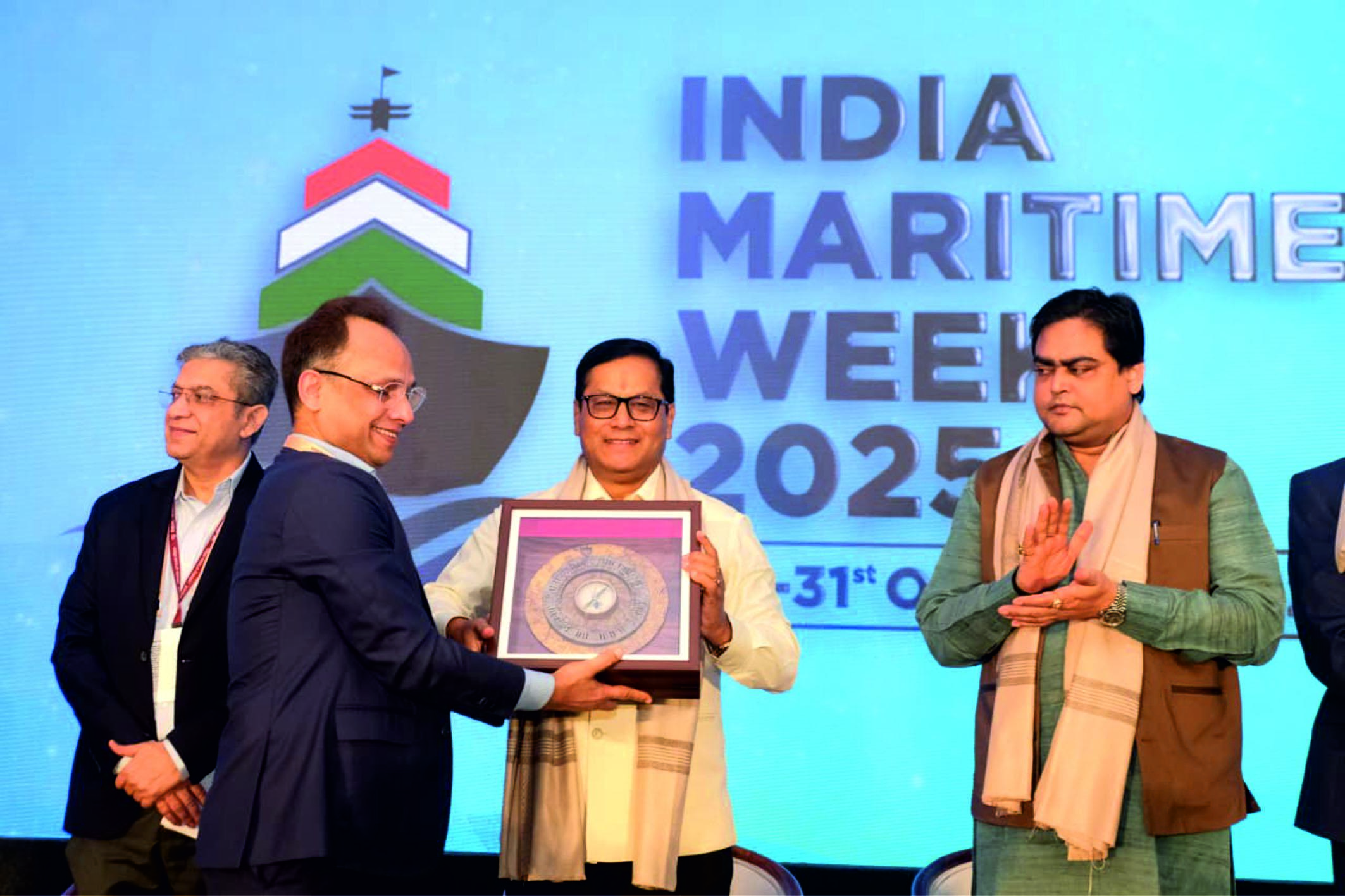
“The maritime transition cannot be achieved in silos — it demands partnership among governments, industry, financiers, and technology leaders,” Mr said. “Together, we can ensure that the seas that connect us also unite us in purpose — to create a future where maritime trade drives both prosperity and sustainability.”
Five major reports were released during the session, focusing on green hydrogen, e-fuels, zero-emission trucking, pollution control, and green port performance benchmarks.
Country sessions
The Sweden Country Session focused on AI-driven automation, LNG and green fuelling, and smart port operations, underscoring partnerships that drive innovation-led growth and clean energy transition. Sweden showcased collaborations in electric vessels, AI-based automation, and smart port systems, marking a significant step toward a green and digital maritime transformation.
India’s Green and Digital Shipping Corridors (GDSCs) with Singapore and Rotterdam, launched in 2025, will further strengthen global partnerships for sustainable maritime trade and accelerate investment in green infrastructure. Norway and Sweden Country Sessions demonstrated India’s growing maritime diplomacy with Northern Europe, with participation from shipowners, technology firms, and innovation agencies.
Speaking at the session, Mr Sonowal said, “With our unique geography along key global trade routes, India is well placed to become a hub for green shipping corridors, connecting domestic and international markets through clean energy trade. To harness this opportunity, India has launched Green and Digital Shipping Corridors (GDSCs) with Singapore and the Netherlands. These partnerships will help scale investments and strengthen India’s position as a bridge between global trade and sustainable growth.”
As India Maritime Week 2025 picked up momentum, the partnerships and policy announcements together define a comprehensive blueprint for India’s maritime transformation — one that is sustainable, inclusive, and globally competitive, highlighted a release.
Ports, inland waterways, safety, cruise, supply chains
The technical session on “Ports as Engines of Transformation” underscored ports as catalysts for industrial growth, innovation, and regional connectivity. Discussions focused on integrating digital technologies, developing climate-resilient infrastructure, and strengthening multimodal linkages to boost port-led industrial corridors.
In “Reviving the Veins of Inland Trade,” experts emphasised the role of inland waterways in reducing logistics costs and promoting green transport. The Inland Waterways Authority of India (IWAI) outlined plans to expand operations across national waterways, focusing on infrastructure modernisation and cargo optimisation.
The “Guardians of the Sea” session placed maritime safety and security at the core of sustainable ocean governance. Representatives from the IMO and national agencies discussed emerging risks, including cyber threats and autonomous vessel regulation, alongside the release of the HSSC Management Standard for harmonised safety practices.
Sessions on the “Cruise and Passenger Economy” explored the potential of coastal and river cruise tourism, calling for streamlined regulations, improved port-city infrastructure and single-window systems for faster project approvals. Cordelia Cruises announced plans to expand to 10 ships by 2031, adding Cochin and Vizag as new home ports.
Meanwhile, “Fortifying Global Supply Chains” emphasised digital integration across ports and logistics networks, advocating smarter and greener trade corridors for resilience and sustainability.
Across discussions, common themes of digitalisation, decarbonisation, skill development and regulatory simplification emerged as key pillars of India’s maritime transformation. The State Sessions of Karnataka and Andhra Pradesh showcased regional maritime opportunities across ports, fisheries, logistics and shipbuilding, underscoring the role of states in driving India’s Blue Economy.
India Maritime Week 2025 thus reaffirmed the nation’s commitment to a blue economy driven by technology, innovation and sustainability — blending global best practices with India’s maritime heritage to chart a cleaner, more resilient future, the release emphasised.
Please visit our youtube channel https://www.youtube.com/@ikargos2719 for fortnightly logistics news analysis and more!